

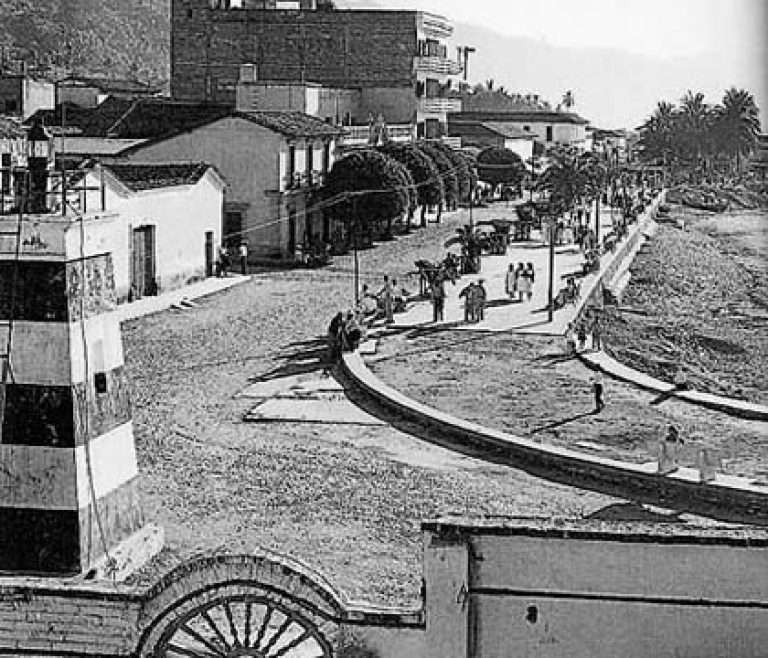
Maybe other cities in Mexico have Fables & Legends. but we have our share.
Street Dogs.
You will likely see some street dogs in town, they may have a collar or they may not, but they are freely roaming without a human.
They may not be strays! They may have a home but their owners let them roam freely during the day, so they can go out, mark their territory, meet other dogs, et cetera. No human to clean up after them so keep your eyes open.
I wonder how many get “rescued” and end up in Canada or somewhere?
But there are some true street dogs without a home.
COCO
One of the first Street dogs I met was Coco, who hung down at Los Muertos Beach, usually in front of Cuates y Cuetes. Who guarded that area, no other dogs allowed. He would occasionally go home with some gringo, stay a couple of days and then back to the beach.
Many were sad when he passed away.
Here is a memory from one of his gringa friends:
Coco he used to be dark, but has steadily gotten browner/lighter/greyer, and has lighter markings, it is Coco. He will often have a collar on but he likes to take it off. He’s been around for at least 9 or 10 years and no one has ever been able to keep him tied down or bring him home for any amount of the time. In fact, when he got attacked by two pit bulls, my friend brought him home to his condo where after a few days, he came home only to find Coco almost ate through a wood door and bashed out a window and escaped 🙂
Some people know him as “Ben” which is funny because they heard people (usually Mexicans)say “Ven coco!” which means “come here coco!” So, when they heard “Ven”= which sounds like “BEN”…. they thought Ben was his name but he is most definitely known as Coco…and he is picky. You can buy him dog food and he will not eat it, he prefers tacos and will pick out the meat and leave the beans and tortilla. Spoiled dog 🙂
With permission of Heather Wilson in PV, I’m posting her words from Facebook.
“With the vet offering no hope and Coco unable to stand or even focus, our dear 12-year-old community mascot was put to sleep tonight about 7:30, very tenderly in the Lazaro Cardenas Park he loved.
His original mom, Rita Kunz, and good friend Cathy Gordon (Sirena’s mom), held him and talked to him to the end. It is SO SAD to lose him, but his death could not have been more peaceful. RIP dear Negro, Blackie, Ben, Ruffus, Rollo… We will NEVER forget you!”
SCOOBY DOO
I first met Scooby when he would hang out outside my friends’ restaurant La Ronda, he got snacks. That is pretty much the way he existed, scrounging around town, he was a true Street Dog.
He would come to Alaskas Diner and stand in the doorway but he NEVER entered.

Rogers saved scraps for him. In the summer, if Roger had the AC on and the door was closed, you would hear one or maybe two barks, nevermore, to signal Roger.
Eventually a couple of friends of mine who lived next door to the Ronda allowed him to stay the night occasionally. That eventually became a permanent situation, but he still kept his usual visits to places like Rogers.
Scooby is in heaven now
THE STORY OF RAICILLA.
Contrary to Fables & Legends no ‘root’ (Spanish Raiz or Raic) is used in Raicilla.
From: tequilamescal.com – now defunct
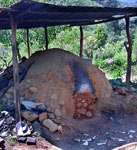
Travellers along the western seaboard of Mexico in the vicinity of Puerto Vallarta occasionally happen onto roadside vendors of a moonshine mezcal called Raicilla (rye-see-ya). The name Raicilla was originally used to disguise this type of mezcal in order to escape restrictions on alcohol production and the related taxes. In other words ‘moonshine’,
My experience has always been that the sale of Raicilla was somewhat clandestine; sales being made on side streets or in small palapas clinging to the mountainsides at the edge of town.
Packaging was usually a screwtop Coke bottle or some other recyclable container and the quality of the beverage verged on the raw side. Behind the harsh flavour, there was always an interesting aftertaste that brought me back and fueled my search for a smoother more civilised Raicilla.
For the past ten years I have crisscrossed Mexico looking for new tequilas and mezcals and adding to my research notes, always searching and sampling. Recently, I discovered a legitimate producer of Raicilla, one who has combined the best of historic techniques with the advantages of modern technology.
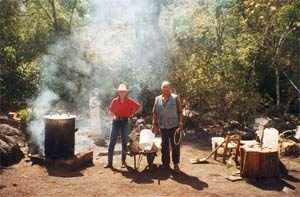
This is the “Destiladora del Real” located in the mountains above Puerto Vallarta. In the past, this area was famous for it’s mining, and the well-paid miners expected their liquor to be of the best quality.
The towns producing Raicilla are San Sebastian del Oeste, Hostotipaquillo, Talpa, Mascota, Atenguillo, Guachinango, and Etzatlan. A combination of reddish brown soils, sun, and rain in this part of western Jalisco created the perfect environment for the growth of the Agave Lechuguilla which is the sugar source for Raicilla.
This agave is a member of the botanical Group Crenatae and is identified as Agave Inaequidens or Agave Maximiliana, commonly known as “Pata de Mula” (Mules Foot). Agave Lechugilla is somewhat smaller than the agaves that pulque and tequila are made from.
As the agave matures it begins to put up a flowering stalk (quiote); this is cut off so that all of the plants sugars are directed to the heart. About the 8th to 10th year the plant matures and is harvested by “Jimadores” who cut away the spiny outer leaves with long handled knives (coas).
The heart of the plant that remains looks like a pineapple and in fact is called a “piña“. These piñas, weighing about one hundred pounds, are taken from the fields to the “taberna” where Raicilla processing takes place.
To appreciate the efforts that go into a “boutique” Raicilla, consider that it takes 15 pounds of agave to produce 1 liter of Raicilla and that only 50 liters of distillate are made every 24 hours.
Traditionally, the first few drops of distillate that emerge are tossed in the air, if it evaporates before landing, the brew is good, but that may be another Fables & Legends ?
Raicilla can be consumed straight in a “Caballito” (tequila shot glass), but is more commonly served chilled in a wineglass, over the rocks, or with Squirt or some type of grapefruit soda.
A popular saying of the Mexican people is: “Para Todo Mal, Mezcal y Para Todo Bien Tambien” (For everything bad, Mezcal and for everything good too)
More info on Mezcal HERE
 |
 |
 |
More Fables & Legends
“So that’s what they think?.”
“The pastor of the church asked me how I liked Ixtapa. I told him that it is a very beautiful place, no doubt, but that I didn’t especially care for it as it was not real life to me , rather a fantasy land, and that I preferred Zihuatanejo and the surrounding colonias.
He seemed puzzled by the fantasy reference so I explained that many of us Americans save for a year or two or longer to be able to go to a place like Ixtapa or Acapulco or Cancun and blow the whole wad in 2 weeks. Then we return to our ordinary, bill paying life.
He, and others, assumed that Americans ALWAYS live and spend as observed on vacation, and this promotes the desire of some Mexicans to migrate to the US.”
Posted by Alex in TJ on Mexico Connect Forum.
Fanny
If you have the good fortune of knowing that you are going to be eating mole, don’t wear white! Trust Fanny. Even if you never spill on that white Oaxacan wedding shirt, mole has an independent will. It will jump off your fork and fling itself onto your white clothes all on its own!
Posted by Fanny on Mexico Connect Forum.
How I ‘FIRED’ my Boss, another Raicilla story
I have been asking Gil (husband of Lucy, owner of Lucy’s CuCu Cabaña, see Shopping) to write a couple of paragraphs for this page. At last he did, all 5 pages of a story, click the link a. So he gets a whole page for his very funny story from the early days here. GoTo- “How I fired my Boss”
This story is included in “Puerto Vallarta on 49 Brain Cells a Day” by Gil Givens, with many other funny stories.
Available at Lucy’s CuCu Cabaña & Zoo, Basilio Badillo # 295 and The Net House, I. Vallarta # 232.
Also available online at AMAZON.